Ancient Nutra Wellness Team · 4 July 2026 · 5 min read
Papaya leaf tea: the bitter daily tonic from grandmother's kitchen
Key takeaways
- Papaya leaf tea is a bitter herbal brew Sri Lankan and South Asian households have used for generations to settle the stomach and support recovery.
- The leaf carries papain, a digestive enzyme, which is part of why it has a long reputation for easing heavy, sluggish digestion.
- It is genuinely bitter. A little ginger, lime, and coconut treacle make it drinkable without drowning the point of it.
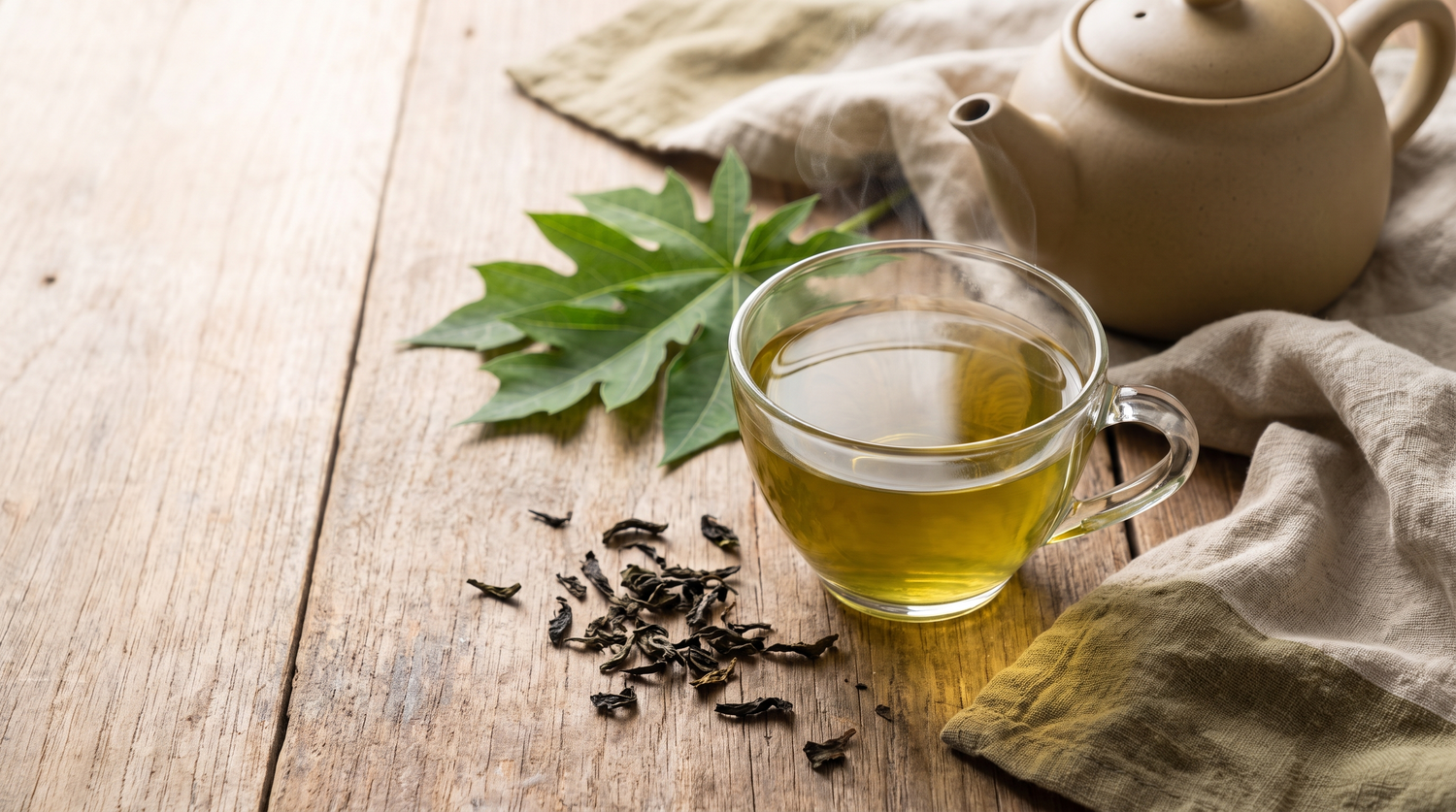
There is a bitter green tea that grandmothers across South Asia have brewed for as long as anyone can remember. It tastes like the garden, sharp and a little medicinal, and it was handed out for a heavy stomach, a slow week, or the tail end of a fever. Papaya leaf tea is not a treat. It is a tonic, and it earns its place by doing a quiet job well.
Here is how to make it at home, how to make the bitterness bearable, and when it actually helps.
What you need
Ingredients (serves 1)
- 2 fresh papaya leaves, torn, or 1 tablespoon dried papaya leaf
- 2 cups water
- 2 thin slices fresh ginger
- 1 teaspoon Ancient Nutra's Coconut Treacle, or to taste
- A squeeze of fresh lime
How to make it
Papaya leaf tea is a simmer, not a quick steep. The leaf is tough, and a proper simmer is what draws out the compounds.
- Rinse the papaya leaves well and tear them into rough pieces so they fit your pot.
- Bring 2 cups of water to a gentle boil, then add the leaves and the ginger slices.
- Lower the heat and simmer for 5 to 10 minutes. The water will turn a deep olive green and smell grassy and sharp.
- Strain into your cup. Discard the leaves.
- Stir in the coconut treacle while the tea is still hot, then finish with a squeeze of lime.
Yields one warm cup. Best sipped slowly, and honestly, best not made too strong the first time.
Why this recipe works
The reason papaya leaf has stayed in kitchens is its enzymes. The leaf contains papain, the same protein-digesting enzyme papaya fruit is known for, along with chymopapain. That is a big part of why it has a long reputation for easing heavy, sluggish digestion (Healthline).
The ginger is not just for flavour. It settles the stomach and warms a brew that is otherwise cooling and bitter, which is the classic way these tonics were balanced. The coconut treacle is a low-glycaemic sweetener that takes the edge off without turning a tonic into a dessert.
In Sri Lankan and wider South Asian tradition, papaya leaf is best known as a recovery drink, especially reached for during dengue season to support the body while it heals. That is folk practice, not a cure, and it belongs alongside a doctor's care, never instead of it.
Variations
Make it dairy-free and sugar-free by skipping the treacle and leaning on extra lime and ginger to carry the flavour. For a warmer, spicier cup, add a small piece of cinnamon bark to the simmer. If you find the fresh-leaf version too strong or too much work, a standardized Ancient Nutra's Papaya Leaves capsule gives you the same herb with none of the bitterness and a consistent daily amount.
Look for
If fresh leaves are hard to find or too bitter, look for a clean papaya leaf capsule with no fillers. Ancient Nutra's Papaya Leaves gives you a consistent daily dose without the kitchen work.
When to drink it
One cup a day is plenty. This is a strong, bitter herb, not a beverage to drink by the litre. Most people take it in the morning or after a heavy meal, when its digestive reputation is most welcome.
Skip it if you are pregnant, and check with a doctor first if you take medication or have a medical condition. And to be honest about it: this is a supportive daily tonic, not a magic drink. It helps the body do what it already does. It does not replace rest, food, or medical care.
The bottom line
Papaya leaf tea is a bitter, honest tonic with a long history in South Asian homes, valued for digestion and recovery. Simmer the leaves with ginger, sweeten lightly with coconut treacle, and finish with lime to make it something you will actually drink.
The minimum-viable version is just papaya leaf simmered in water. If you want the same herb without the bitterness or the pot on the stove, a daily papaya leaf capsule does the job.

Papaya Leaves
The traditional papaya leaf tonic in a clean daily capsule, with none of the bitterness.
Shop Papaya LeavesSources and further reading
- 7 Emerging Benefits and Uses of Papaya Leaf, Healthline.
- Papaya Leaf, Memorial Sloan Kettering Cancer Center.
Written by the Ancient Nutra Wellness Team. The team researches, sources, and tests every ingredient before it earns a place in an Ancient Nutra blend. Questions? Email info@ancientnutra.com or message Ancient Nutra on Instagram.
Medical disclaimer: This article is for educational purposes only and is not medical advice. Statements have not been evaluated by the FDA. Ancient Nutra products are not intended to diagnose, treat, cure, or prevent any disease. Speak with a qualified healthcare provider before starting any new supplement, especially if you take prescription medication, are pregnant, or have a medical condition.