By the Ancient Nutra Wellness Team · June 6, 2026 · 6 min read
- Monsoon weather slows digestion and brings more waterborne stomach trouble, so the gut needs gentler food and a little plant support.
- Seven traditional herbs cover the common monsoon complaints: Beli and ginger for an unsettled stomach, Triphala for sluggish days, and Activated Carbon for gas after a heavy meal.
- Start with one herb that matches your main issue, give it a week, and keep the basics (clean water, lighter meals, warm food) ahead of any capsule.
The first heavy rains change how your stomach feels. Meals sit longer, appetite drops, and the odd street snack or unboiled glass of water turns into a day spent close to the bathroom. Monsoon season is hard on digestion, partly because humidity slows everything down and partly because waterborne stomach bugs travel faster when the drains overflow.
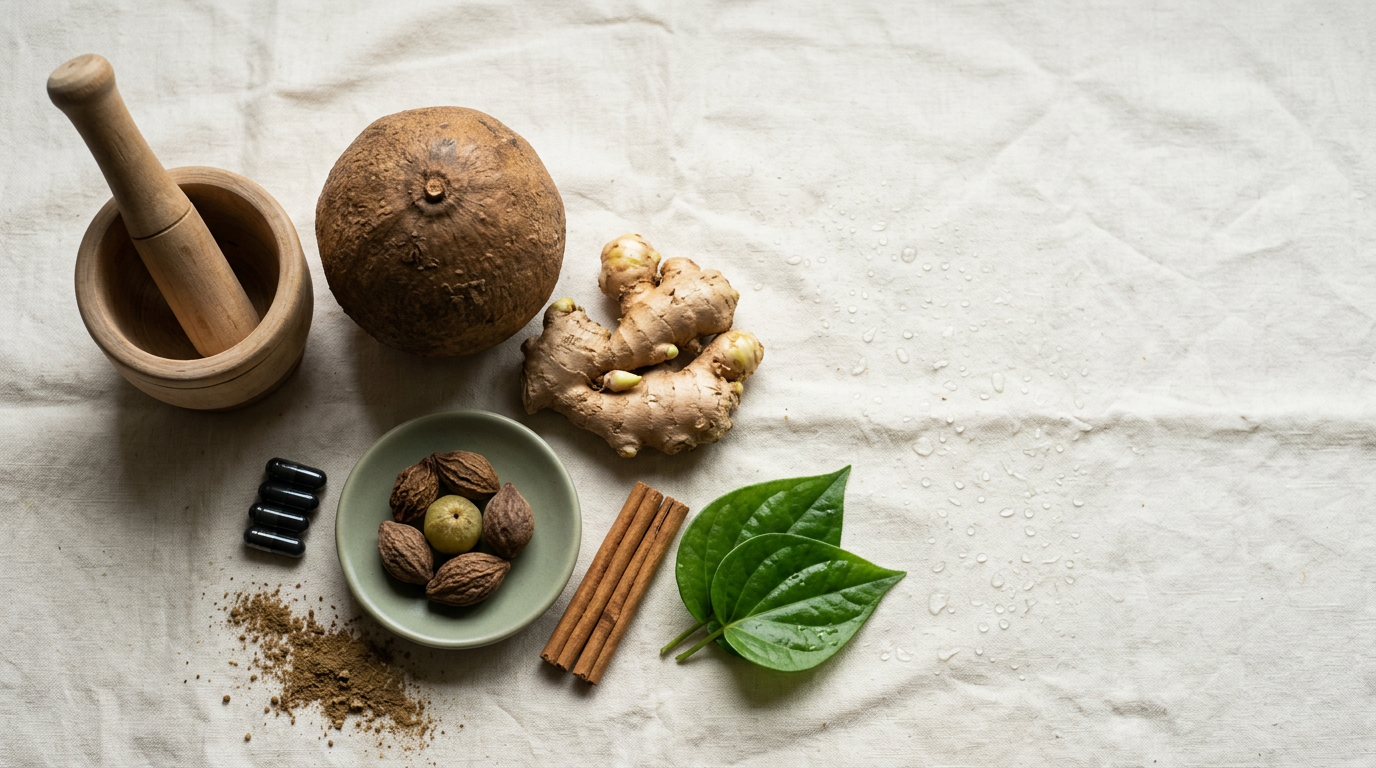
None of these herbs replace clean water, cooked food, and rest. What they do is give the gut a steadier footing when the weather works against it. Here are seven that Sri Lankan and Ayurvedic households have leaned on for generations, picked for the specific complaints monsoon tends to bring.
- Beli (Bael)
- Triphala
- Ginger
- Activated Carbon
- Iramusu (Sarsaparilla)
- Ceylon Cinnamon
- Maila Kola
1. Beli, the Sri Lankan gut classic
Beli, also called Bael (Aegle marmelos), is the herb most Sri Lankan grandmothers reach for the moment a stomach turns loose. The ripe fruit pulp is traditionally taken to firm up digestion and calm a runny gut, which is exactly the kind of trouble monsoon brings.
The tradition holds up under testing. A study on Bael unripe fruit found it slowed down gut spasms and reduced fluid loss in models of diarrhea, which is the bottom line of what people have used it for all along (J Ethnopharmacol, 2009). It helps most when your stomach is unsettled and you want something gentle rather than a harsh stopper. For daily use, Ancient Nutra's Beli capsules keep the dosing simple.
2. Triphala, the gentle daily reset
Triphala is the three-fruit Ayurvedic blend used as a daily gut tonic for more than two thousand years. Where Beli settles, Triphala keeps things moving, which matters in monsoon when heavier comfort food and less activity leave you sluggish and backed up.
It works gradually, supporting regular bowel movements without the cramping of a strong laxative. It suits the person whose monsoon problem is the opposite of an upset stomach: too slow, too full, too heavy. A small evening dose is the usual starting point. See Ancient Nutra's Triphala for daily-friendly capsules.
3. Ginger, for the queasy, sluggish days
Ginger earns its place every rainy season. It is the herb for nausea, that heavy queasy feeling after a fried kottu eaten too late, and a stomach that just will not get going in damp weather.
A review of clinical trials found ginger reliably eased nausea and helped the stomach empty a little faster, which is why it calms that stuck, over-full feeling (Food Sci Nutr, 2019). It helps most before or just after a meal you suspect will sit badly. Around 500mg to 1g of ginger root is a sensible daily range. Ancient Nutra's Ginger capsules deliver 600mg per capsule.
4. Activated Carbon, for gas and "something I ate"
Activated Carbon is the one to keep on hand for the bloated, gassy afternoon after a meal that did not agree with you. Made from coconut shells, it has a porous structure that traps gas and odours in the gut so they pass through instead of building up.
This is the rare antiflatulent with an approved European health claim: activated charcoal reduces excessive gas accumulation after eating when 1g is taken at least 30 minutes before and again after a meal (EFSA, 2011). Use it occasionally, not daily, and keep it a couple of hours apart from medication and other supplements, since it can bind those too. Ancient Nutra's Activated Carbon uses organic coconut shell carbon.
5. Iramusu, cooling support when the humidity spikes
Iramusu, also called Sarsaparilla (Hemidesmus indicus), is Sri Lanka's classic cooling root. Monsoon humidity leaves many people feeling heavy and overheated even in the rain, and Iramusu has long been taken to cool the body and support clean digestion from the inside.
It is the herb for the muggy, sticky stretch of the season, often brewed as a light tea or taken in capsule form. It pairs naturally with the gut herbs above when the issue is general heaviness rather than a specific upset. Ancient Nutra's Iramusu capsules make the daily dose easy.
6. Ceylon Cinnamon, the warming spice for heavy meals
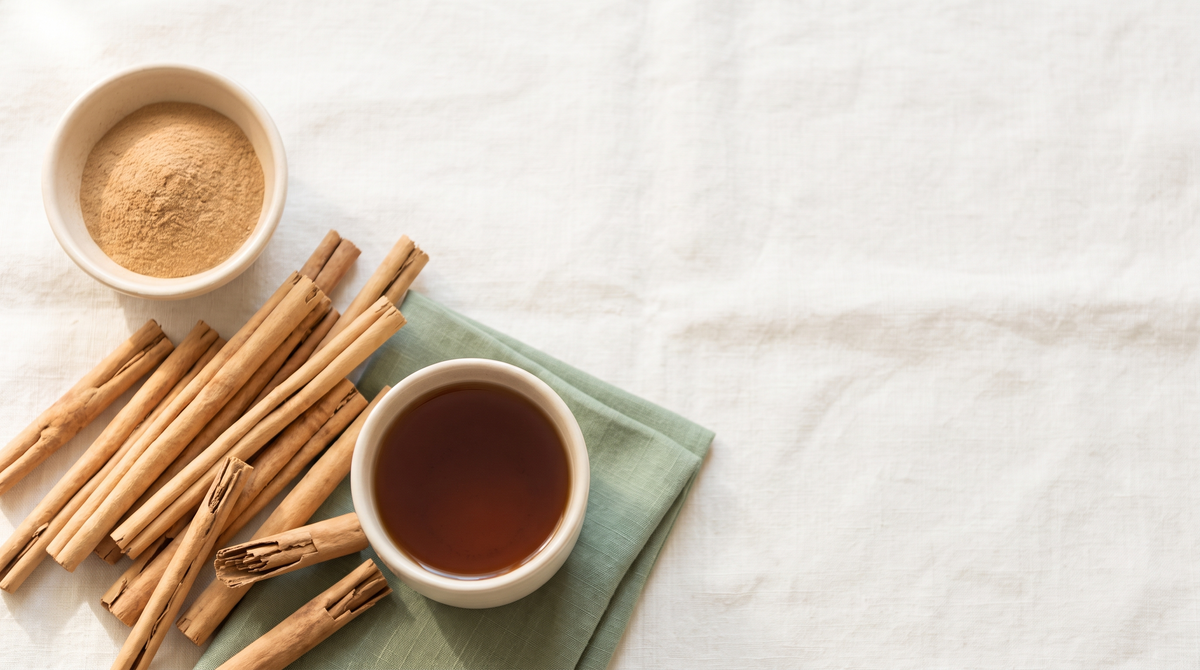
True Ceylon Cinnamon (not the harsher cassia sold in most supermarkets) is a gentle, warming spice that helps steady the stomach after rich monsoon cooking. It has a long traditional use for digestion and a mild antimicrobial quality that suits a season of questionable water.
A little goes a long way. Stirred into warm water, tea, or a curry, it adds comfort to the kind of slow, heavy meals the weather tends to encourage. It is more an everyday steadier than a fix for acute trouble.
7. Maila Kola, the calming Sri Lankan leaf
Maila Kola (Piper sarmentosum) is a lesser-known Sri Lankan plant traditionally used to calm inflammation and soothe an irritated gut. The heart-shaped leaves have been part of village herbal practice long before anyone wrote the science down.
Early lab work points to anti-inflammatory activity, which fits its traditional role for an unsettled, inflamed stomach. It rounds out this list as the gentle, calming option for when the gut feels raw rather than merely sluggish or gassy.
When the team at Ancient Nutra mapped out what customers actually ask for during the rainy months, it was not the exotic herbs. It was Beli and ginger, every June, the same two names parents grew up trusting.
How to actually use this list
This is a buffet, not a shopping list. You do not need all seven, and starting them all at once tells you nothing about what is working. Pick the one herb that matches your main monsoon complaint and give it about a week.
If your stomach is loose and unsettled, start with Beli. If you feel slow and backed up, start with Triphala. If it is nausea and a stuck, over-full feeling, reach for ginger. Keep Activated Carbon aside for the occasional gassy, bad-meal afternoon rather than as a daily habit.
And keep the basics ahead of any capsule. Boiled or filtered water, freshly cooked warm food, and a little less of the deep-fried rainy-day comfort eating will do more for your gut this season than anything in a bottle. The herbs support that foundation. They do not replace it.
The bottom line
For most monsoon stomach trouble, two herbs cover the ground: Beli when things are loose and unsettled, and ginger when it is nausea and heaviness. Triphala handles the sluggish days, and Activated Carbon handles the occasional gassy aftermath.
Beli is the one to keep within reach all season, the Sri Lankan gut classic that has earned its place through generations of rainy Junes. Ancient Nutra's Beli capsules are a simple way to keep it on hand.

Beli (Bael) Capsules
The Sri Lankan gut classic, traditionally used to settle an unsettled, monsoon-season stomach.
Shop BeliSources
- Brijesh S, et al. Studies on the antidiarrhoeal activity of Aegle marmelos (Bael) unripe fruit: validating its traditional usage. Journal of Ethnopharmacology, 2009.
- Nikkhah Bodagh M, et al. Ginger in gastrointestinal disorders: a systematic review of clinical trials. Food Science & Nutrition, 2019.
- EFSA Panel on Dietetic Products, Nutrition and Allergies. Scientific Opinion on activated charcoal and reduction of excessive intestinal gas accumulation. EFSA Journal, 2011.
- Further reading: Peterson CT, et al. Triphala: current applications and new perspectives on functional gastrointestinal disorders. Chinese Medicine, 2018.
Medical disclaimer: This article is for educational purposes only and is not medical advice. Statements have not been evaluated by the FDA. Ancient Nutra products are not intended to diagnose, treat, cure, or prevent any disease. Speak with a qualified healthcare provider before starting any new supplement, especially if you take prescription medication or have a medical condition.
Written by the Ancient Nutra Wellness Team. The team researches, sources, and tests every ingredient before it earns a place in an Ancient Nutra blend. Questions? Email info@ancientnutra.com or message Ancient Nutra on Instagram.