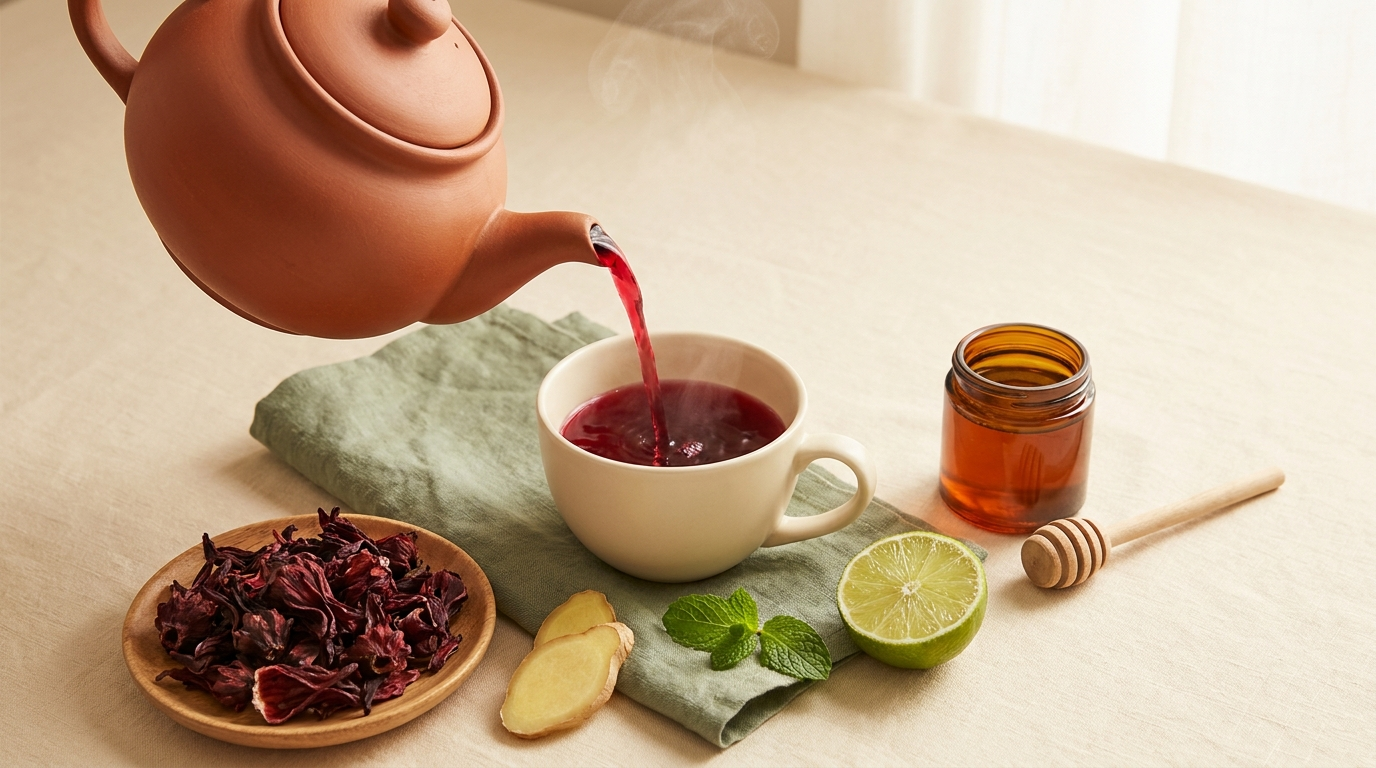
- A five-minute daily cup of hibiscus tea is a simple monsoon habit that supports the body through humid, sleep-ragged weeks. It is a quiet daily input, not a flu shot.
- Hibiscus (Hibiscus sabdariffa) is anthocyanin-rich, and a 2022 review links it to improved oxidative status. Ginger warms the gut and softens the tartness, while lime adds a touch of vitamin C.
- One cup a day is plenty in a normal week, two in heavy rain weeks. The minimum version is just hibiscus flowers and hot water; everything else is decoration.
The monsoon arrives the same way every year. The afternoon turns grey, the air gets heavy, and by the second week of rain something feels off in the gut and the throat. Sri Lankan kitchens have a habit for these days: a small clay pot, dried red flowers, hot water, a little honey. The cup goes dark crimson. The day gets easier.
Here is the recipe the team at Ancient Nutra keeps coming back to during the Yala rains. It takes five minutes. The ingredient list is short. The taste is tart, faintly floral, and quietly refreshing.
What you need
Ingredients (serves 1)
- 1 tablespoon dried hibiscus flowers (about 2 grams), from Ancient Nutra's Hibiscus Flower Tea
- 250 ml just-boiled water (about 1 cup)
- 1 teaspoon raw honey or coconut treacle (optional)
- 1 thin slice of fresh ginger
- 2 fresh mint leaves (optional)
- 1 small squeeze of lime
If you keep Ancient Nutra's Iramusu capsules in the cupboard, that is the pairing for very hot afternoons. Hibiscus is brisk and bright. Iramusu is cooling and clean. The two share the body-cooling job between them.
How to brew it
- Rinse the flowers. Place 1 tablespoon of dried hibiscus in a small bowl. Add a splash of cool water, swirl for 10 seconds, drain. This rinses off any field dust without losing colour.
- Heat the water. Bring 250 ml of fresh water to just under a boil, around 95°C. Hibiscus does not need a rolling boil. Too hot, and the tea turns sharp.
- Steep. Pour the water over the flowers in a small ceramic cup or clay pot. Add the slice of ginger now. Cover with a saucer to keep the volatile aromatics in. Steep 5 to 7 minutes.
- Strain. Pass the tea through a fine mesh strainer into your drinking cup. The colour should be a deep crimson, almost ruby. If it is pale pink, give it another minute.
- Finish. Stir in honey or coconut treacle while the tea is still warm. Squeeze in a small wedge of lime. Drop in the mint leaves last.
Yields one warm cup. Best sipped slowly, around 4 PM when the rains hit and the energy dips. Also good cold, poured over ice, on a sticky afternoon.
Why this recipe works
Hibiscus (specifically Hibiscus sabdariffa, the calyx variety used in this tea) is one of the most antioxidant-dense flowers on the planet. The deep red colour comes from anthocyanins, the same family of plant pigments that make blueberries and pomegranates worth their reputation. A 2022 review in the journal Foods looked at the published human-trial evidence and found hibiscus consumption is consistently linked to improved oxidative status and supportive cardiovascular markers (PMC, 2022).
What that means in plain English: hibiscus helps the body deal with the kind of mild oxidative stress that builds up when the weather is humid, sleep gets ragged, and the immune system is doing extra work. It is not a flu shot. It is not a cure. It is a quiet daily input that supports the body when the season turns.
The ginger does two small jobs. It warms the gut, which is useful when the monsoon makes everything feel cold and damp. It also takes the edge off the natural tartness of hibiscus. The lime adds a touch of fresh vitamin C and brightens the cup. Honey is optional, but a real raw honey rounds out the flavour without spiking blood sugar the way refined sugar would.
Variations
Iced version. Brew the tea at double strength (2 tablespoons of flowers in the same 250 ml), let it cool, then pour over ice. Add a thin slice of orange. This is the version Sri Lankan grandmothers used to serve at lunch during the dry season.
Spiced monsoon version. Add 1 cardamom pod and 1 thin sliver of Ancient Nutra's Ceylon Cinnamon while steeping. Warmer, rounder, perfect for cold evenings.
Caffeine-free immunity stack. Add a small pinch of dried Guduchi or rotate the tea with Ancient Nutra's Guduchi capsules taken once a day during the wettest weeks. Hibiscus handles the daily oxidative load. Guduchi handles the deeper immune-tone work.
Look for
Whole dried hibiscus flowers (not crushed powder, not tea bags filled with dust). The flowers should be deep red, intact, and fragrant when you open the pack.
Ancient Nutra's Hibiscus Flower Tea is sun-dried whole calyx, non-GMO, caffeine-free, and grown in Sri Lanka.
A small piece of context
Hibiscus is not originally a Sri Lankan herb. It travelled along the old spice and trade routes, settled into village gardens, and quietly earned its place on the mid-morning tea tray. The team at Ancient Nutra sources whole calyx from local growers who dry the flowers in the sun, the slow way. That is what keeps the colour deep and the anthocyanins intact. Anything machine-dried at higher temperature loses the bright red and a lot of the antioxidant work along with it.
When to drink it
Once a day is enough during a normal week. Two cups a day in heavy monsoon weeks is fine for most adults. Time it between meals (an empty stomach extends the antioxidant uptake) or with a light snack if your stomach is sensitive to tart drinks. Skip the late-evening cup if you are sensitive to anything mildly diuretic; hibiscus is gentle, but it is not nothing.
One honest note: this is not a magic drink. The cup will not replace sleep, real meals, sunlight, or a sane stress level. What it does is sit alongside those basics and make them a little easier on rainy days.
The bottom line
A daily cup of hibiscus tea during monsoon season is one of the simplest, most pleasant immunity habits a Sri Lankan household can build. Five minutes, six ingredients, no special equipment. If you only have time for the minimum version, that is hibiscus flowers and hot water. Everything else is decoration.
The pack of whole sun-dried flowers that the team at Ancient Nutra keeps on the office shelf, the same one this recipe is built around, is Ancient Nutra's Hibiscus Flower Tea. Brew it slowly. Drink it warm. Let the rains do what they do.

Hibiscus Flower Tea 50g
Sun-dried whole calyx that supports the body with anthocyanin-rich antioxidants through the monsoon weeks.
Shop Hibiscus TeaSources
- Montalvo-González, E., et al. (2022). "Physiological Effects and Human Health Benefits of Hibiscus sabdariffa: A Review of Clinical Trials." Foods. PMC9033014
- Further reading: WebMD, Hibiscus Tea: Nutrition Facts and Benefits
- Further reading: A Comprehensive Review of the Antimicrobial Effects of Hibiscus Species (PMC, 2024)
Written by the Ancient Nutra Wellness Team. The team researches, sources, and tests every ingredient before it earns a place in an Ancient Nutra blend. Questions? Email info@ancientnutra.com or message Ancient Nutra on Instagram.
Medical disclaimer: This article is for educational purposes only and is not medical advice. Statements have not been evaluated by the FDA. Ancient Nutra products are not intended to diagnose, treat, cure, or prevent any disease. Speak with a qualified healthcare provider before starting any new supplement, especially if you take prescription medication or have a medical condition.