Ancient Nutra Wellness Team · 9 May 2026 · Updated 6 August 2026 · 6 min read
Guduchi: the Ayurvedic root for a steadier immune system
Liver safety: please read before taking Guduchi
Guduchi (Tinospora cordifolia) has been associated with liver injury in published case reports. The US National Institutes of Health LiverTox database lists it as a well-established cause of clinically apparent liver injury, with cases typically appearing between a few weeks and six months of use (NIH LiverTox, 2025).
Do not take Guduchi if you have liver disease, or alongside other medicines or supplements known to affect the liver, without medical advice. Stop taking it and seek medical attention if you notice yellowing of the eyes or skin, dark urine, persistent nausea, unusual tiredness, or pain in the upper right abdomen. Do not take it continuously for long periods without a doctor's supervision.
Key takeaways
- Guduchi (Rasakinda in Sinhala, Tinospora cordifolia botanically) is a root with a long history of traditional Ayurvedic use, particularly during recovery.
- The immune-cell activity reported for Guduchi comes from laboratory and animal studies. NIH LiverTox states plainly that none of these activities has been demonstrated in human studies.
- It carries a documented liver-safety signal. Read the caution above before taking it, and speak to your doctor.
Guduchi does not get the marketing budget that Ashwagandha or Turmeric get. It has been quietly doing the same job in Sri Lankan and Indian households for centuries: the thing you reach for when someone in the house is run down, not the thing you take to feel amazing. That is a smaller promise than most immune supplements make, and it is also the honest one. As the caution above sets out, an honest account now has to include what the medical literature has reported.
What Guduchi actually is
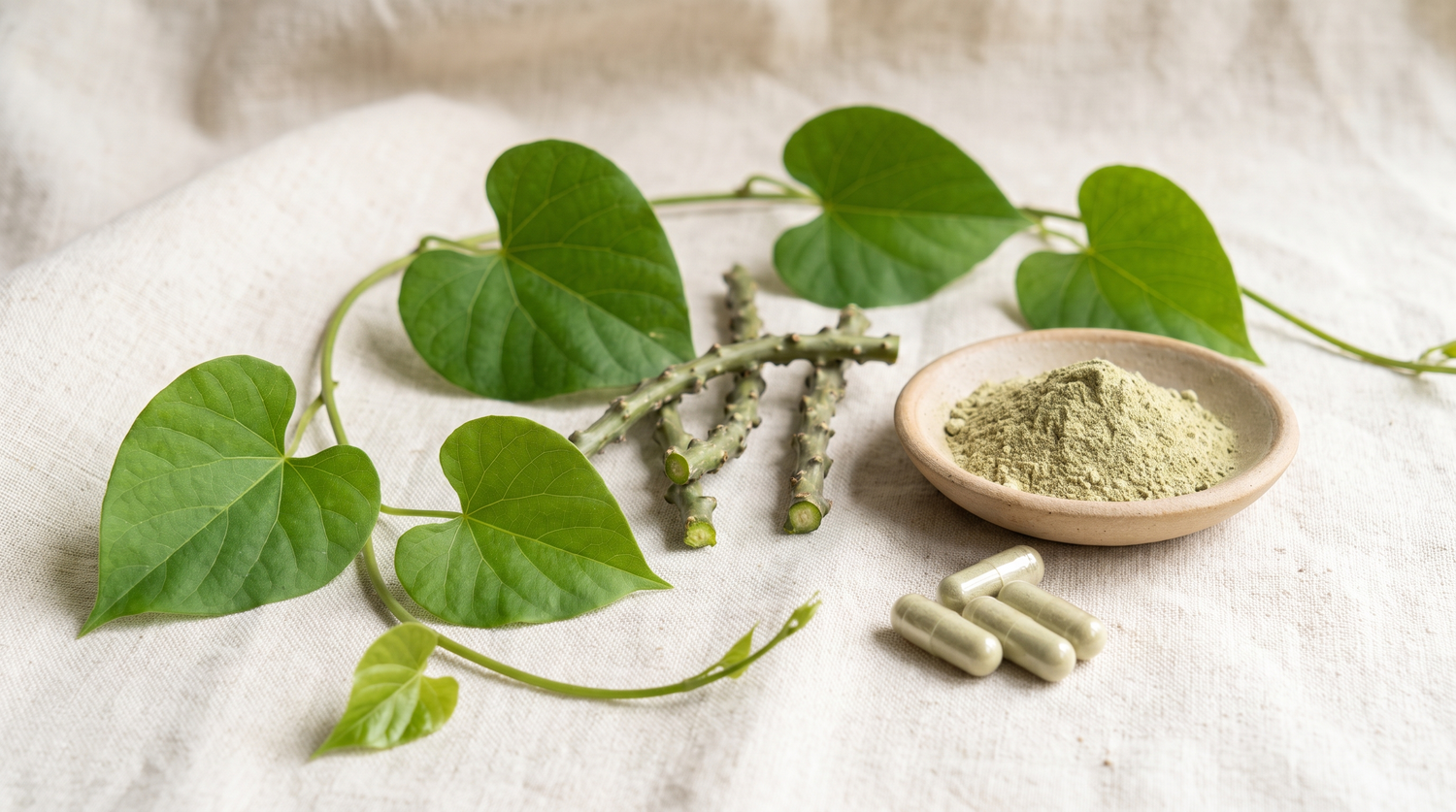
Guduchi is a climbing vine root, used in Ayurvedic medicine long before "immune support" was a supplement aisle category. In Sinhala it is called Rasakinda. In Ayurveda it goes by Guduchi, sometimes Amrita, meaning nectar, a nod to how consistently it was used to help people recover after illness. Ancient Nutra's capsule form uses 400mg of pure Guduchi powder, no filler blends.
What the research actually shows
Laboratory studies on Tinospora cordifolia extract report increased activity in macrophages, the immune cells that engulf and clear pathogens (PMC review, National Institutes of Health). That is laboratory and animal work, and it is important to be straight about what it does and does not mean: NIH LiverTox states that none of the biological activities shown for Tinospora in animal studies has been demonstrated in studies in humans (NIH LiverTox, 2025).
So the honest framing is traditional use plus preclinical signal, not proven human benefit. Ayurvedic practitioners traditionally paired Guduchi with digestive herbs rather than treating it as an immunity herb alone. We previously described Guduchi as supporting liver function; we have removed that, because the medical literature points the other way. See the caution at the top of this article.
None of this means Guduchi replaces sleep, hydration, or a real diet when the body is fighting something off.
Who should think carefully before taking Guduchi
- Anyone with liver disease, or a history of liver problems. Do not take it without medical advice.
- Anyone taking other medicines or supplements that affect the liver. Speak to your doctor first.
- Pregnant or breastfeeding women, and anyone on immunosuppressant medication. Talk to a doctor before adding it.
- Anyone planning to take it continuously for months. Reported liver-injury cases have appeared between a few weeks and six months in. This is not an herb to take open-endedly without supervision.
Who does not need it: someone with a genuinely healthy, low-stress routine who rarely gets sick. Guduchi is a traditional support herb for a body under real load, not a daily requirement for anyone.
How to take Guduchi, if you and your doctor decide to
The traditional range is 300 to 400mg of powder, once or twice a day, taken with a meal rather than on an empty stomach. Traditional use is cyclical rather than continuous: a few weeks during a stressful or high-exposure period, then a break. Given the reported injury latency, a short cycle with a real break is the more cautious pattern, and continuous year-round use is not something we would suggest without a doctor's oversight.
Look for
400mg of pure Guduchi powder per capsule, with no unnecessary filler blend. Ancient Nutra's Guduchi is made in Sri Lanka under BRCGS, GMP, HACCP, FSSC 22000, and ISO 22000 certification, in vegetarian capsules. Please read the liver-safety caution above first.
Where Guduchi comes from
In Sinhala households it is Rasakinda, a vine that grows easily and gets steeped or dried without much ceremony. In the Ayurvedic tradition it travels under the older name Guduchi, sometimes Amrita. Neither name needs mystique added to it. It earned its place the same way most kitchen-shelf remedies do: it worked often enough, for long enough, that grandmothers kept passing it down. Long traditional use is a real thing, and it is also not the same as a modern safety record. Both can be true at once.
The bottom line
Guduchi is not a dramatic herb, and it has a long, unglamorous history in Sri Lankan and Indian households. It also carries a documented liver-safety signal that a responsible account cannot leave out, and no demonstrated human efficacy behind the laboratory findings. If you are considering it, read the caution at the top, speak to your doctor, and treat it as a short cyclical traditional remedy rather than an open-ended daily habit.
Sources and further reading
- National Institute of Diabetes and Digestive and Kidney Diseases. "Tinospora cordifolia." NIH LiverTox, updated 2025.
- Saha S, Ghosh S. "Tinospora cordifolia: One plant, many roles." PMC, National Institutes of Health.
- Sannegowda KM, et al. "Immune-Stimulatory and Therapeutic Activity of Tinospora cordifolia." PMC, National Institutes of Health.
Written by the Ancient Nutra Wellness Team. The team researches, sources, and tests every ingredient before it earns a place in an Ancient Nutra blend. Questions? Email info@ancientnutra.com or message Ancient Nutra on Instagram.
Medical disclaimer: This article is for educational purposes only and is not medical advice. Statements have not been evaluated by the FDA. Ancient Nutra products are not intended to diagnose, treat, cure, or prevent any disease. Speak with a qualified healthcare provider before starting any new supplement, especially if you take prescription medication or have a medical condition.