Ancient Nutra Wellness Team · 17 July 2026 · 6 min read
Ginger capsules: when whole-root powder beats the extract
Key takeaways
- Whole-root ginger powder keeps ginger's full mix of compounds. A standardised extract usually concentrates one of them and drops the rest.
- Around 1 gram of ginger a day is the amount that has been shown to calm nausea and settle the stomach.
- For everyday digestion, nausea, and warmth, whole-root ginger in a capsule is the simpler, more complete choice. Extracts earn their place only for a narrow, high-dose job.
Stronger is not the same as better. The supplement aisle has trained everyone to read "10:1 extract" as an upgrade over plain powder, and sometimes it is. With ginger, it often is not. Ginger works because of a whole family of compounds acting together, and a lot of standardised extracts quietly leave most of that family behind. So before you pay more for the concentrated version, it is worth knowing when the whole root is the smarter buy.
What ginger actually is
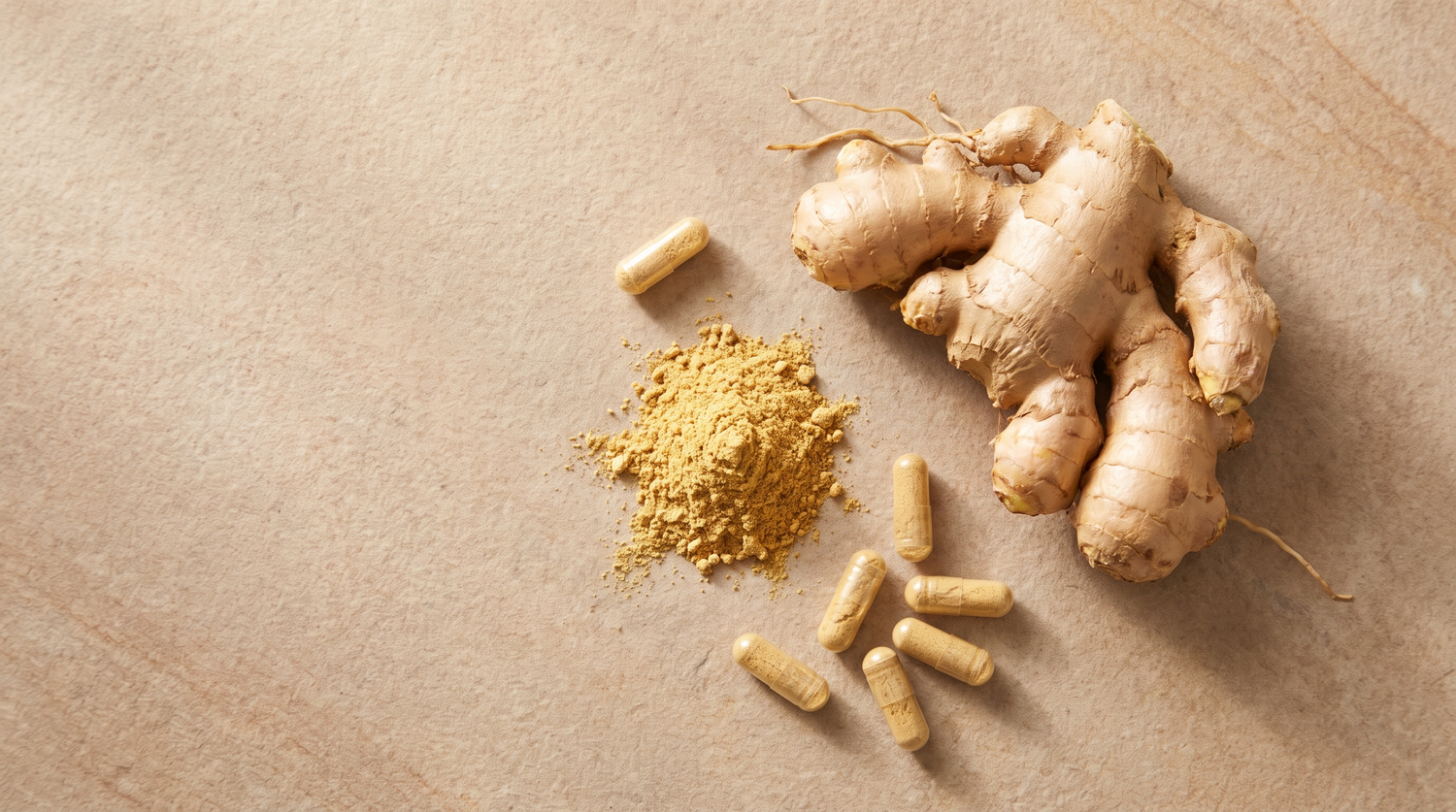
Ginger is the underground stem of Zingiber officinale, the same knobbly root you grate into tea and curry. It has been a kitchen and home-remedy staple across Sri Lanka and South Asia for centuries, mostly for the stomach and for warmth on a cold or rainy day. A capsule of whole-root ginger powder is simply that dried root, milled fine, with nothing stripped out and nothing added.
What whole-root powder actually gives you
Ginger's effects do not come from a single hero molecule. Fresh ginger is rich in gingerols, the compounds behind that sharp, warming bite. When ginger is gently dried, some of those gingerols convert into shogaols, which are gentler on the palate but, for the stomach and for warmth, arguably the more interesting half of the pair. Alongside them sit zingerone and a set of aromatic oils that carry ginger's smell and much of its soothing character.
Whole-root powder keeps all of that intact. It is the dried root and nothing else, so the ratio of gingerols to shogaols to oils stays close to what nature and the drying process produced. That full spread is the point. Most of the research showing ginger settles the stomach used plain ginger powder at everyday doses, not an isolated fraction.
According to the U.S. National Center for Complementary and Integrative Health, ginger has the strongest evidence for easing nausea, including morning sickness and the queasiness that follows surgery. Reviews of that work land on a familiar number: about 1 gram of ginger a day is where the benefit shows up.
When the whole root beats the extract
Here is the catch with concentrated ginger. Many extracts are standardised to gingerols, because gingerols are the easiest marker to measure and print on a label. To hit that number the process leans on fresh or lightly processed root and often removes the volatile oils. What you end up with is a lot of one compound and much less of the shogaols and aromatics that the whole root delivered for free.
For the jobs most people actually want ginger for, digestion, nausea, and a bit of daily warmth, that is a downgrade dressed up as an upgrade. The whole root gives you the same compounds your grandmother's ginger tea gave you, in a dose you can control and a form you can carry. A high-ratio extract makes sense only when you need a large, specific compound load for a defined reason, which is a narrow use case, not the everyday one.
Who ginger capsules are for
Ginger is one of the gentlest, best-evidenced roots you can keep on hand. It tends to help most for:
- People who get car-sick, sea-sick, or air-sick. A capsule an hour before travel is easier than chewing raw root on the way to the airport.
- Anyone dealing with everyday nausea or a heavy, sluggish stomach after meals. Ginger helps the stomach empty and move things along.
- People who feel the cold and want a daily source of warmth, especially through the monsoon and cooler months.
- Cooks who love ginger but do not always have fresh root to hand. A capsule is a consistent, measured backup.
Who does not need it? If your digestion is already comfortable and you cook with fresh ginger a few times a week, you are probably getting enough. Ginger is a helper, not a foundation. Real meals, decent sleep, and movement do the heavy lifting first.
How to actually take ginger
Aim for around 1 gram of ginger a day, which usually works out to one or two capsules of whole-root powder depending on the fill. For nausea or motion sickness, take it 30 to 60 minutes before you travel or before the trigger. For daily digestion, take it with or just after a meal. Splitting a larger dose across two meals is gentler on an empty stomach than taking it all at once.
Ginger is very well tolerated. The main thing to watch is that high doses can add up if you are already on blood-thinning medication, so check with a doctor if that is you.
Look for
Whole-root ginger powder, not a gingerol-only extract, at roughly 500mg to 1g per serving. Ancient Nutra's Ginger capsules use dried whole root, so you get the full spread of gingerols, shogaols, and aromatic oils rather than one isolated fraction.
Where ginger comes from
Ginger sits in Ayurveda under the name of a near-universal digestive, often called the "great medicine" for how many everyday stomach and cold complaints it was reached for. In Sri Lankan homes it rarely needed a name at all: it was just what went into the pot when someone felt off. The modern research has caught up with the kitchen wisdom, and it keeps pointing back to the same simple whole root, not a lab-concentrated version of it.
What to stack ginger with
Ginger plays well with the other warming roots. For inflammation and post-exercise recovery, it pairs naturally with turmeric, which is why the two so often share a curry. Ancient Nutra's Turmeric & Black Pepper covers that angle, with the black pepper there to help the turmeric absorb.
If your goal is broader digestive comfort rather than nausea specifically, ginger works alongside a gentle daily cleanser like Ancient Nutra's Triphala. Ginger warms and moves the stomach; Triphala keeps the whole digestive tract regular. This stack is for people who want everyday gut comfort, not everyone needs both.
How long ginger takes to work
Ginger is one of the few supplements where you can feel the effect the same day. For nausea and motion sickness, it works within the hour. For general digestion, most people notice their stomach feels lighter after meals within the first week or two. There is no long build-up phase here, which is part of why it has stayed in kitchens for so long.
The bottom line
For nausea, everyday digestion, and warmth, whole-root ginger in a capsule gives you ginger's full toolkit, not just the one compound that is easy to measure. It is the version closest to the tea your family already made, only measured and easy to carry. Keep a bottle in the bag for travel and one in the kitchen for meals. The root does not care whether you grate it or swallow it, so long as you actually take it.

Ginger - 60 capsules
Whole-root ginger powder for nausea, digestion, and daily warmth, in a measured capsule.
Shop GingerSources and further reading
- Ginger, National Center for Complementary and Integrative Health (NIH).
- Ginger for nausea and vomiting, Mount Sinai Health Library.
Written by the Ancient Nutra Wellness Team. The team researches, sources, and tests every ingredient before it earns a place in an Ancient Nutra blend. Questions? Email info@ancientnutra.com or message Ancient Nutra on Instagram.
Medical disclaimer: This article is for educational purposes only and is not medical advice. Statements have not been evaluated by the FDA. Ancient Nutra products are not intended to diagnose, treat, cure, or prevent any disease. Speak with a qualified healthcare provider before starting any new supplement, especially if you take prescription medication or have a medical condition.